Botulax 100U vs Botox: What’s Actually Different
Both are botulinum toxin type A — here’s what really separates them, from units to approvals.
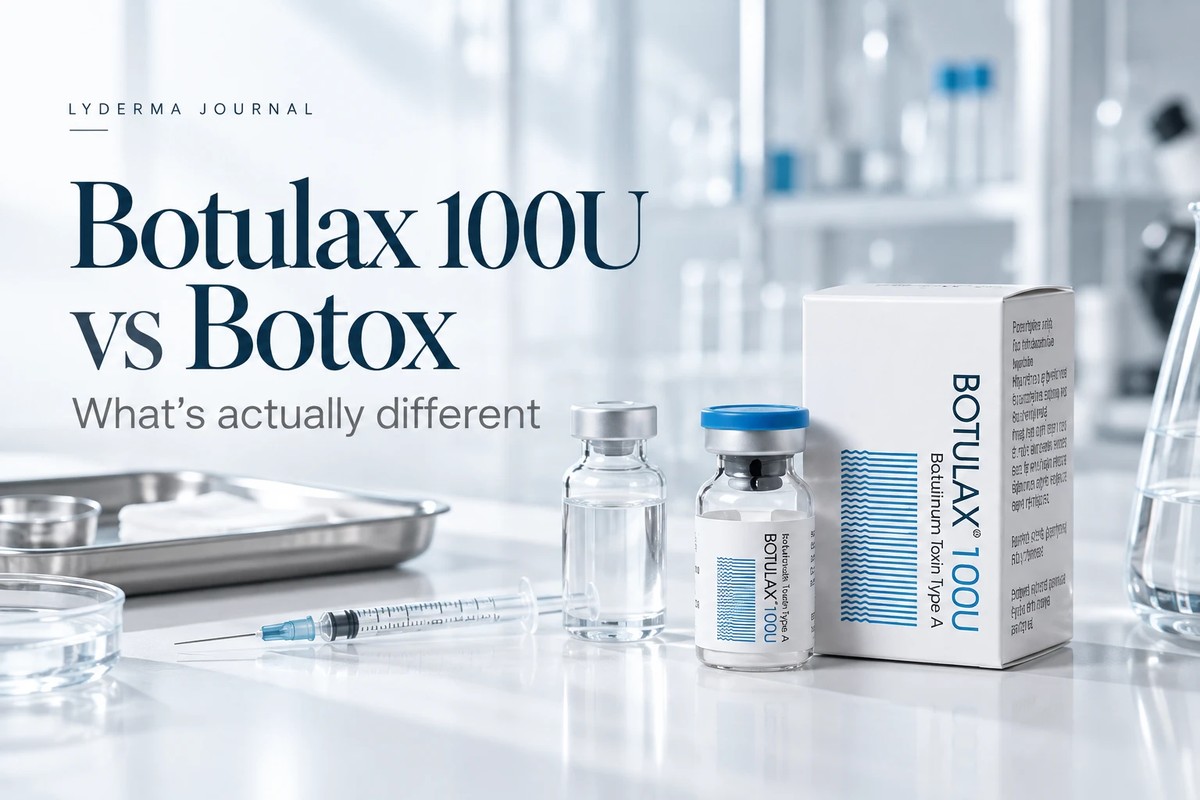
Botulax is a botulinum toxin type A made by Hugel (South Korea), supplied here as a lyophilized powder in a 100-unit vial and reconstituted with sterile saline before use. It is a different product from Botox: different manufacturer, format and approvals, and unit doses are product-specific and cannot be converted between brands. Botulax is approved by Korea’s MFDS and is not FDA-approved; Hugel’s FDA-approved U.S. toxin is LETYBO (letibotulinumtoxinA-wlbg).
Botulax comes up in clinic conversations all the time, usually followed by one question: is it simply “Korean Botox”? The short answer is no. Both are botulinum toxin type A — but they are different products, and the differences matter in practice.
What is Botulax?
Botulax is a botulinum toxin type A made by Hugel, Inc. in South Korea. Botulax is supplied as a lyophilized (freeze-dried) powder — this format in a 100-unit vial — stabilised with human serum albumin, and it is reconstituted with sterile saline before use. It is approved by Korea’s Ministry of Food and Drug Safety (MFDS). Hugel’s neurotoxin, letibotulinumtoxinA, is derived from the Clostridium botulinum strain CBFC26 [2].
How is Botulax different from Botox?
Botulax and Botox are both botulinum toxin type A, but they are made by different manufacturers, in different formats, with different regulatory approvals and units. Hugel ran a randomized, active-controlled Phase III trial comparing Botulax with Botox for moderate to severe glabellar lines [1].
| Botulax | Botox | |
|---|---|---|
| Manufacturer | Hugel, Inc. (South Korea) | Allergan, an AbbVie company |
| Active | Botulinum toxin type A | Botulinum toxin type A |
| Supplied as | Lyophilized powder | Vacuum-dried powder |
| Regulatory | Approved by Korea’s MFDS | FDA-approved in the U.S. |
| Units | Product-specific — not interchangeable between brands | |
A unit of one botulinum toxin is not a unit of another. Each product is dosed by its own labeling.
Can Botox units be converted to Botulax units?
No. Each manufacturer measures potency with its own assay, so unit values are specific to that product. The U.S. prescribing information for Hugel’s FDA-approved toxin states plainly that its units “cannot be compared to nor converted into units of any other botulinum toxin products” [3]. That is why dosing is always product-specific per the manufacturer’s labeling — a unit count that suits one brand should never simply be carried over to another.
How is Botulax prepared?
Botulax is reconstituted with sterile, preservative-free 0.9% sodium chloride shortly before treatment, following the manufacturer’s instructions for use. The volume of saline chosen determines how many units sit in each 0.1 mL — a larger volume can make small doses easier to measure precisely. Reconstitution, dosing and injection are carried out only by trained medical professionals.
Is Botulax FDA-approved?
No. Botulax is approved by Korea’s MFDS and is not FDA-approved for the U.S. market. Its manufacturer, Hugel, does have an FDA-approved U.S. botulinum toxin: LETYBO® (letibotulinumtoxinA-wlbg), first approved in 2024 for moderate to severe glabellar lines [3]. Hugel’s letibotulinumtoxinA was evaluated in a randomized, double-blind, placebo-controlled Phase 3 study of 355 adults with glabellar lines [2]. A Korean SKU is not the same product as an FDA-approved one, so it is always worth confirming status for the exact product and territory.
In many clinics, toxins sit within a wider plan — alongside an HA filler like Juvéderm Ultra 3 for volume, or a biostimulator for gradual collagen support.
Key takeaways
- Botulax and Botox are both botulinum toxin type A, but they are different products from different manufacturers.
- Units are product-specific and cannot be converted between brands.
- Botulax is MFDS-approved, not FDA-approved; Hugel’s FDA-approved U.S. toxin is LETYBO.
Questions we hear most
Is Botulax the same as Botox?
No. Both are botulinum toxin type A, but they are different products from different manufacturers, with different formats, approvals and labeling.
Is Botulax FDA-approved?
No. Botulax is approved by Korea’s MFDS. Its manufacturer, Hugel, has an FDA-approved U.S. toxin called LETYBO (letibotulinumtoxinA-wlbg), first approved in 2024.
Who makes Botulax?
Botulax is made by Hugel, Inc., a biopharmaceutical company based in Chuncheon, South Korea.
Can Botox unit doses be used for Botulax?
No. Units are measured by each manufacturer’s own assay and cannot be compared or converted between botulinum toxin products. Dosing always follows the product’s own labeling.
How is Botulax 100U reconstituted?
With sterile, preservative-free 0.9% sodium chloride shortly before use, per the manufacturer’s instructions for use. The saline volume chosen sets the units per 0.1 mL.
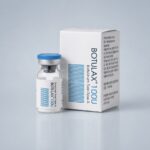 Featured in this articleBotulax® — Botulinum Toxin Type A (100U)
View product →
Stocking this for your clinic? Send a wholesale enquiry and we’ll come back with availability.
Last reviewed September 22, 2026. Reviewed against publicly available manufacturer information, regulatory documents and peer-reviewed literature listed below. This article is educational content for licensed professionals and informed readers. It is not medical advice and does not replace the manufacturer’s instructions for use or a clinician’s judgement.
References
- Phase III Clinical Trial to Evaluate the Safety and Efficacy for Improvement of Glabellar Lines of Botulax Compared to Botox (NCT01791920). ClinicalTrials.gov. clinicaltrials.gov/study/NCT01791920
- Efficacy and Safety of Letibotulinumtoxin A in the Treatment of Glabellar Lines: A Randomized, Double-Blind, Multicenter, Placebo-Controlled Phase 3 Study. Aesthetic Surgery Journal, 2022. pmc.ncbi.nlm.nih.gov/articles/PMC13267890
- LETYBO (letibotulinumtoxinA-wlbg) for injection — Prescribing Information. U.S. Food and Drug Administration, 2024. accessdata.fda.gov/drugsatfda_docs/label/2024/761225s000lbl.pdf